Choosing a
Catering Style
that is best for you
Learn Common Service Styles + the Pros and Cons to determine what is best for your wedding
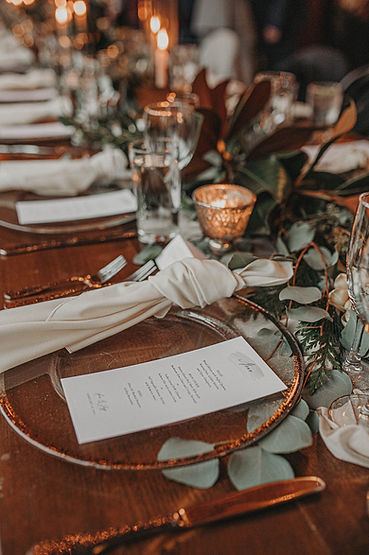
As you plan your wedding, spend some extra time and consideration on one of the most important elements of the whole event - the food! One of the biggest decisions that you will need to make is how you want to feed your guests. The type of catering service you choose can shape the flow of your wedding reception and help dictate the “feel” of the evening. Sound overwhelming? To help make this decision less daunting, read on for a better understanding of each catering style. Plus learn about some of the pros and cons of each one, to help you determine what is best for your wedding.
Plated and Served
With plated meals, you have the option of choosing one entrée for all your guests or offering your guests two or three choices and having them RSVP with their entrée selection. This is traditionally a more formal-style dinner service. If you are offering guests entrée choices, you will need to collect their RSVPs and provide that information to the catering company along with guests' table assignments so that the meal service can run smoothly. This is also an opportunity for guests to notify you regarding any special dietary needs.
Pros:
-
A classic and elegant way to serve guests, seated dinners are also a great time for the wedding party to give toasts or for the couple to have their first dance.
-
If you have an event schedule to adhere to, sit-down catering can help in managing the flow of your event.
-
The wait staff delivers each course to guests at their assigned seats. This gives them more time to connect with others at their table. It’s also a great way to make everyone feel special.
Cons:
-
Serving plated meals typically comes with a higher price tag. This doesn’t have to be the case, however. If a sit-down meal is important to you, work with your caterer to select cost-efficient menu options.
-
Guests have fewer food choices. When selecting the menu options, be sure to choose items that most people enjoy and accommodate dietary restrictions.
-
Did someone’s plus one realize they can attend at the last minute? Sit-down seating leaves less room for guest count fluctuations.
Buffet
A Buffet style catering service is common for a more casual atmosphere while also offering your guests more options. Buffets can be one sided or double sided, generally depending on guest count, to help move guests through dinner service. The DJ or catering team can release tables, keeping the buffet organized and giving the catering staff time to replenish items that are running low.
Pros:
-
Buffets are often more affordable choices. These feasts are great for large receptions. They offer a wider variety of food choices and guests can enjoy second helpings.
-
Buffet tables can be designed in several ways, be aesthetically pleasing, and incorporate elements of your wedding to create personal touches.
-
Guests can customize their plates.
Cons:
-
Buffet-style dinners can take a long time, and some guests may not enjoy waiting in line or serving themselves. Consider doing multiple buffets to allow maximum number of guests to be served at a time.
-
The larger the event, the more you risk the food getting cold. Work with the caterer to ensure they have a plan for keeping everything at their desired temperatures.
-
You may need a larger reception space to accommodate the buffet.
Family Style
Family-style dinners, served to the entire table, create a warm atmosphere. Guests feel a sense of home as bowls and platters are passed around during conversation, giving the feeling of comfort, as if at their own dinner table. With this style of catering service, guests are seated like with a plated meal and multiple trays of food are placed in the center of the table for guests to pass around and serve themselves.
Pros:
-
This way of eating brings an ease and familiarity and it encourages conversation between family and strangers alike.
-
You can offer a larger variety, aiding to dietary restrictions and picky eaters.
-
No waiting for guests to finish going through a buffet or station line.
Cons:
-
Platters will take up a lot of the space that might otherwise have been used for your centerpieces and decor, so you’ll need to either cut way down on those, or you’ll need to rent larger tables (i.e. added cost). (If elaborate table runners, florals and votives are your tablescape vision, this may not be the service style for you.)
-
Guests are serving themselves and having to pass around trays of food, so there can be a bit of fumbling around with serving utensils.
-
You will need large quantities of platters, bowls, and serving utensils which may mean a high rental cost.
Stations/Heavy Hors d’Oeuvres
Hors d’Oeuvres are a great option if you have a crowd that likes to mingle and doesn’t like to sit still. Food tables are placed throughout the reception to eliminate long lines. When offering stations/heavy hors d’oeuvres, you will want to have a variety of options for guests, from seafood and beef to vegan and gluten free.
Pros:
-
Opting for an assortment of small bites rather than a full meal creates a fun, cocktail-party vibe. Plus, people are free to grab a bite whenever they like.
-
This idea can offer huge cost savings if you choose the right hors d’oeuvres. It can look very luxurious and still be quite filling.
-
A great way to incorporate you and your partner’s favorite cuisines or foods.
Cons:
-
Some guests have never experienced a cocktail reception and may be expecting a full dinner meal; therefore be sure to mention it on your invitations.
-
For food stations to work effectively, you will need to spread them out and explain to guests that they are intended to dine small plate style and come back for seconds and thirds. If guests don’t understand this style, dinner can feel a bit awkward and confusing.
-
Requires food to be open longer as guests tend to eat in a more casual, time-consuming fashion.
Recent Articles
Real Weddings